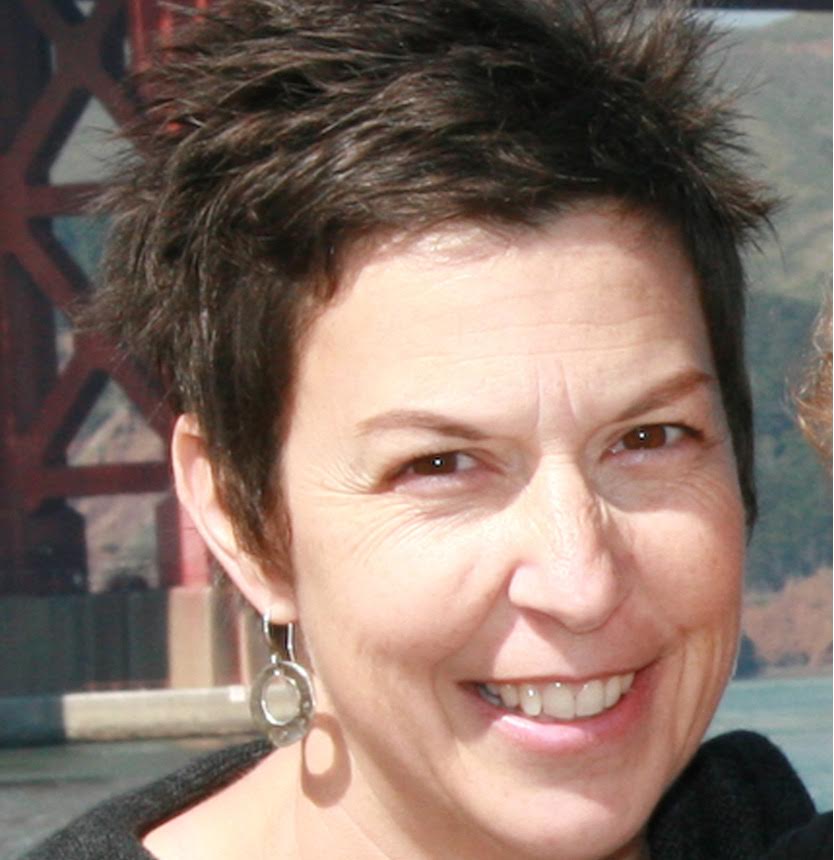
 Shannon Jeffries has been Art Directing and Production Designing feature animation for 20 plus years. She recently completed her first VR film, “Allumette”, for Penrose Studios. The story has premiered at both Sundance and the Tribeca Film Festivals 2016 and more recently, won over audiences at the Cannes Film Festival 2016. Jeffries is currently working on visual development for a new story from Penrose Studios.
What made you interested in VR?
I have spent the last 20+ years working in animated feature film and 15 of which, Art Directing and Production Designing. A big part of my job, and frankly my favorite part, is developing the visual story. Using all the tools available as a visual designer, I build the visual structure based on the script using line, color, space, camera/ composition, etc. to drive the visual choices for the film. As the artistic lead, it is my responsibility to then communicate this plan through all aspects of production to maintain the integrity and consistency of the visual story being told. I have always loved clear limits when approaching a story. I feel it promotes creativity in ways that having too many options can hinder, or blur the intent. I have also enjoyed theater design for this reason, and have always been inspired by theatrical Production Designers who successfully transform a set with minimal props and well thought out lighting. It takes less than you think to make an environment believable. This is what appeals to me about VR. I love the limitations, though I think it’s important to continually push the boundaries. At this time, the goal for me is to design to the strengths of VR, and push the boundaries of it’s weaknesses.
What was your most memorable experience in VR?
I was blown away the first time I saw “The Rose and I” by Penrose Studios, which was also the first VR experience I had had.. I had never seen anything like it. It was so simple yet so moving. It felt to me like I had just stepped into a lovely children’s book. I knew then, I wanted to make stories you could step into, a virtual living children’s book.
What kind of experiences would you like to have in VR?
I love the simplicity of children’s book stories and I love stylized illustrations. For the moment, I really want to explore all the stories I can, and hopefully bring my experience working in feature length animations to the future of VR feature films.
Why is it important for women to be included in the industry?
As in any industry, women bring a unique perspective and often a thoughtful approach to problem solving. I have always believed and approached every story as a unique problem to solve that deserves it’s own unique voice. One of the things that really blew me away about VR, that felt very different from film, is how it touches a deeper emotional place when you are engaged. From a very young age, girls for the most part, are very socially aware beings and sensitive to the subtlety of human behavior, that’s hard to dispute. In fact, it is so ingrained in our society that this is characteristic of being a woman, that often it is the punch line. I see it as a unique strength and a valuable resource. To me, it’s a no brainer that when it comes to evoking emotion through imagery, story or music, it’s extremely short sighted and even irresponsible to not consider a woman’s perspective.
As someone who has worked both on regular films as well as VR films, what has been the most challenging thing in making the transition? What do you find yourself doing differently when working on a VR film?
As I mentioned above, it’s the limitations that I find so appealing about designing for VR, but at the same time, it is also the most frustrating aspect. Because it is so early in it’s infancy, I find my production value expectations, don’t match what VR is capable of just yet. Because I’ve been working in feature digital animation for so long, I forget that where we are now is where we were in animation some 20+ years ago when we were trying to figure out how to render crowds or how to achieve global illumination, etc.
As far as “doing things differently”, I find that I am much more aware of the limitations right from the beginning in the conceptual stage, and design accordingly. In film, you always have to think about the budgetary limitations, but that has always felt soft to me. It’s very different to approach a design problem with the remote possibility that money might get tight at some point in the next 3-4 years. Whereas in VR, if it’s over designed, it just won’t work, literally, it breaks. I think this has made me a much more thoughtful designer, one who thinks more big picture. What are the essential elements needed to tell the story? In “Allumette”, because we were creating a puppet/ dollhouse miniature world, I kept thinking in terms of what would a toy looks like for a toddler vs. an 8yr. old. My repeated mantra to the team was “lose all choking hazards”, meaning strip the details that don’t help drive the story. Because in the end, it better communicated the hand built, slightly oversized scale to the world, and was essential in keeping the frame rate down so that I could have other more important story elements, such as volumetric clouds for our “dollhouse in the sky”.
I keep comparing my VR experience with theatrical design. Like in theater, the choices have to be broad, and the space contained. You want to make sure that without letting the viewer know, you are still driving the intended story experience. For me, lighting, color, sound and even the set have become much more important in the storytelling. In fact, I think of the set as another character. It’s that important. In film, these parts felt more equally applied, and in some cases even an afterthought. With VR, it’s very hard to cheat characters and sets to look great from all angles, or to compose a shot. In film, we would set the camera, and proceed to break the character, the lighting, the set, etc., to achieve a shot composition. This is one of the fun challenges for me. If I can’t control the camera and composition, then how do I design the lighting and how do I design the set to imply these compositions? Perhaps then, the set has to become an actor in the story, positioning and repositioning itself for the viewer to experience in a very specific way. Feels very much like theater to me.
I love that more than ever, creative is driving technology, and technology is challenging creative. This is the delicate dance I have always wished for. I have all confidence in the energy and excitement behind VR/AR technology. We will get there, and I believe we will surpass all expectations. I’m just thrilled to be a part of it from the ground up.
 Welcome to (virtual) reality
Recent Comments