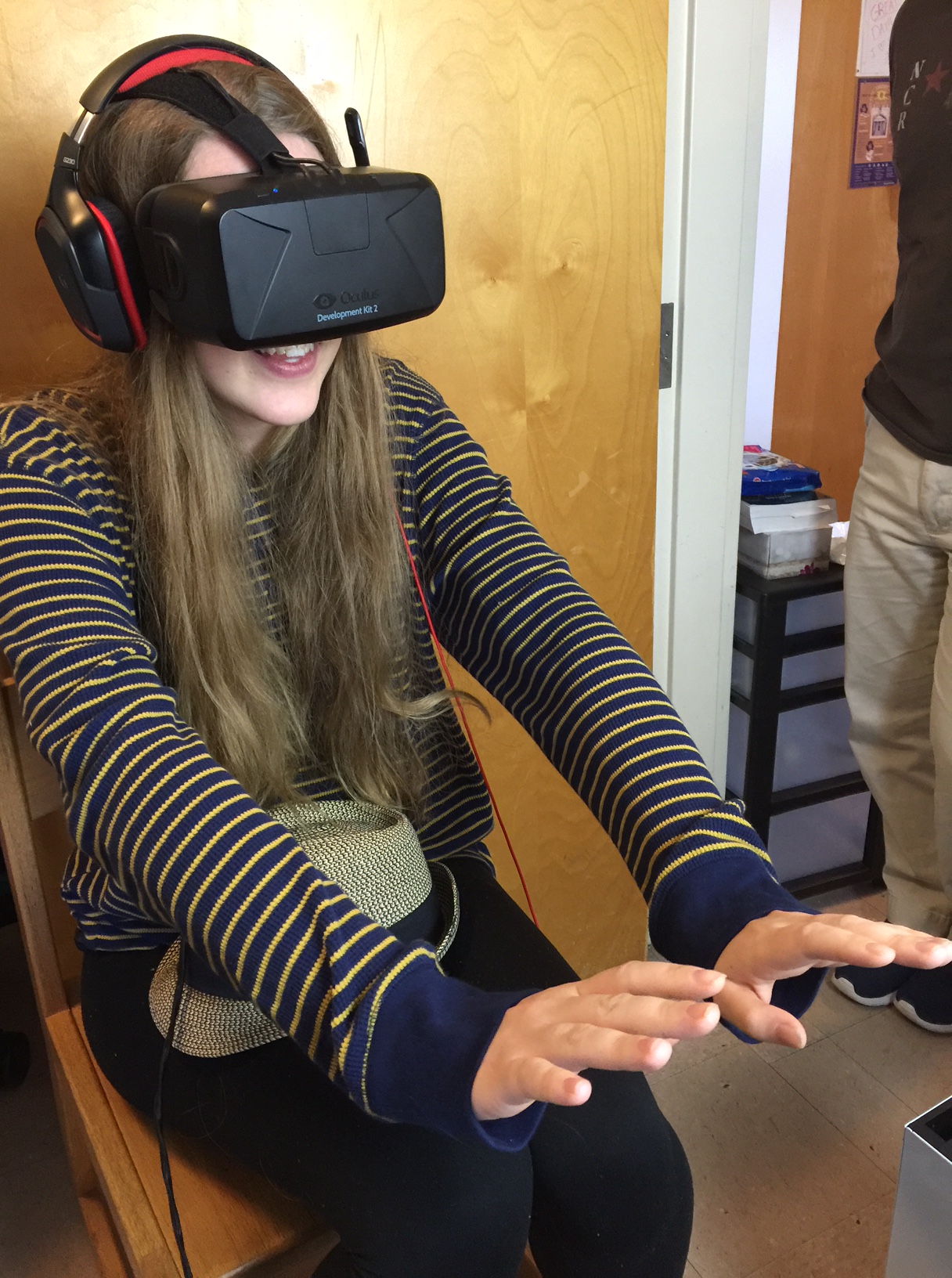
The second demo I ever tried in the Oculus Rift was a rollercoaster. I’m much of a rollercoaster fan in the first place. They scare me. So when I was given the opportunity to try one in VR, I was a little hesitant. However, I would be sitting in my familiar computer chair with my feet resting firmly on the carpeted floor. How bad could it be? After all, I won’t really feel like I’m on a rollercoaster, right?
I was amazed at how much I had to do to remind myself that I wasn’t actually on one. As my virtual car leaned over the edge of the drop, I could feel the unmistakable flip in my stomach.
The rollercoaster was amazing, yet I felt that it was missing something. My mind believed that my body was moving, but since my body wasn’t actually moving, I felt motion-sick. I knew that there was not an easy fix for this problem, but maybe something could help.
I decided to try having people ride the VR rollercoaster twice: once normally, and once with a fan blowing on them. The addition of the fan wasn’t anything special, but I was curious to see if it would change their perception.
I was on to something. With the fan on, I noticed a lot more white knuckles gripping the side of the chair. 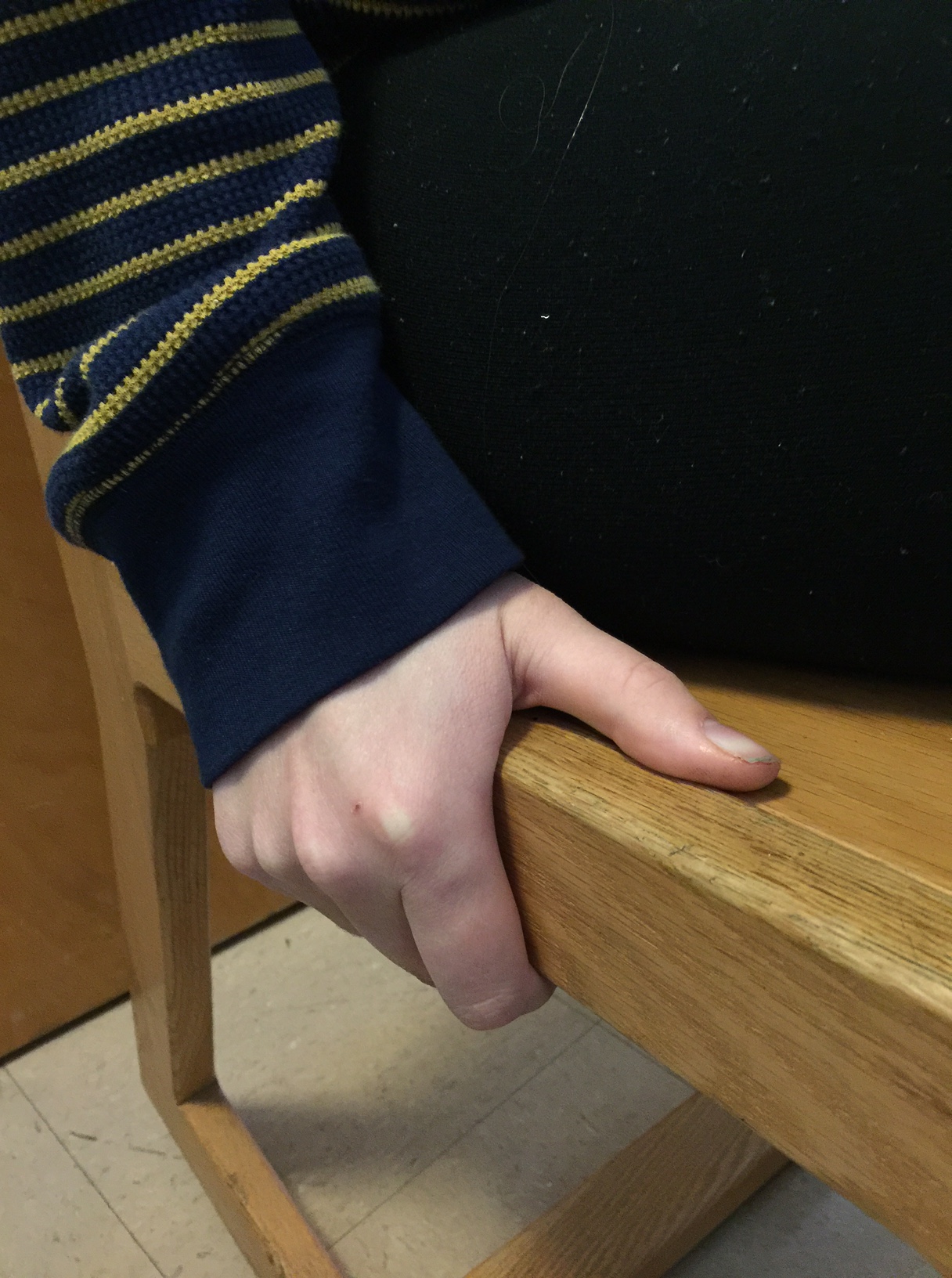
Most of the people involved said that the addition of the fan made the rollercoaster much more realistic. One individual remarked that after awhile, he stopped noticing the fan at all. In his mind, the wind from the fan made sense, since he was moving forward.
Though the technology is still very much under development, it is clear that the ability to become more immersed in a virtual world is right at our fingertips. If a cheap fan can drastically change a person’s experience, imagine what can be done with a little more time and effort: moving chairs, omnidirectional treadmills, suits that give feedback, all of these things could be possible in the future of VR.
 Welcome to (virtual) reality
Leave a comment